


Ashfaq Academyof Clinical Medicine

Paediatrics

Pediatrics OPD Masterclass

Manage the everyday paediatric OPD with confidence.

  • Starts15 November 2026
  • FeePKR 3,000
  • FormatLive online + 6-month recordings
  • Time8–10 PM PKT on Zoom · usually alternate days8 PM PKT = 7 PM UAE · 6 PM KSA · 3 PM UK (GMT) / 4 PM UK (BST)

Who can join? Doctors, nurses & allied health professionals

Why this course

What you get

  • Take a focused paediatric history and examination in a busy OPD
  • Recognise danger signs and know when to admit or refer
  • Choose investigations wisely and interpret them
  • Prescribe safely with weight-based doses and correct durations
  • Counsel parents clearly on home care and red flags

Each batch gets a private WhatsApp group where Zoom join links, recordings and case discussions are shared.

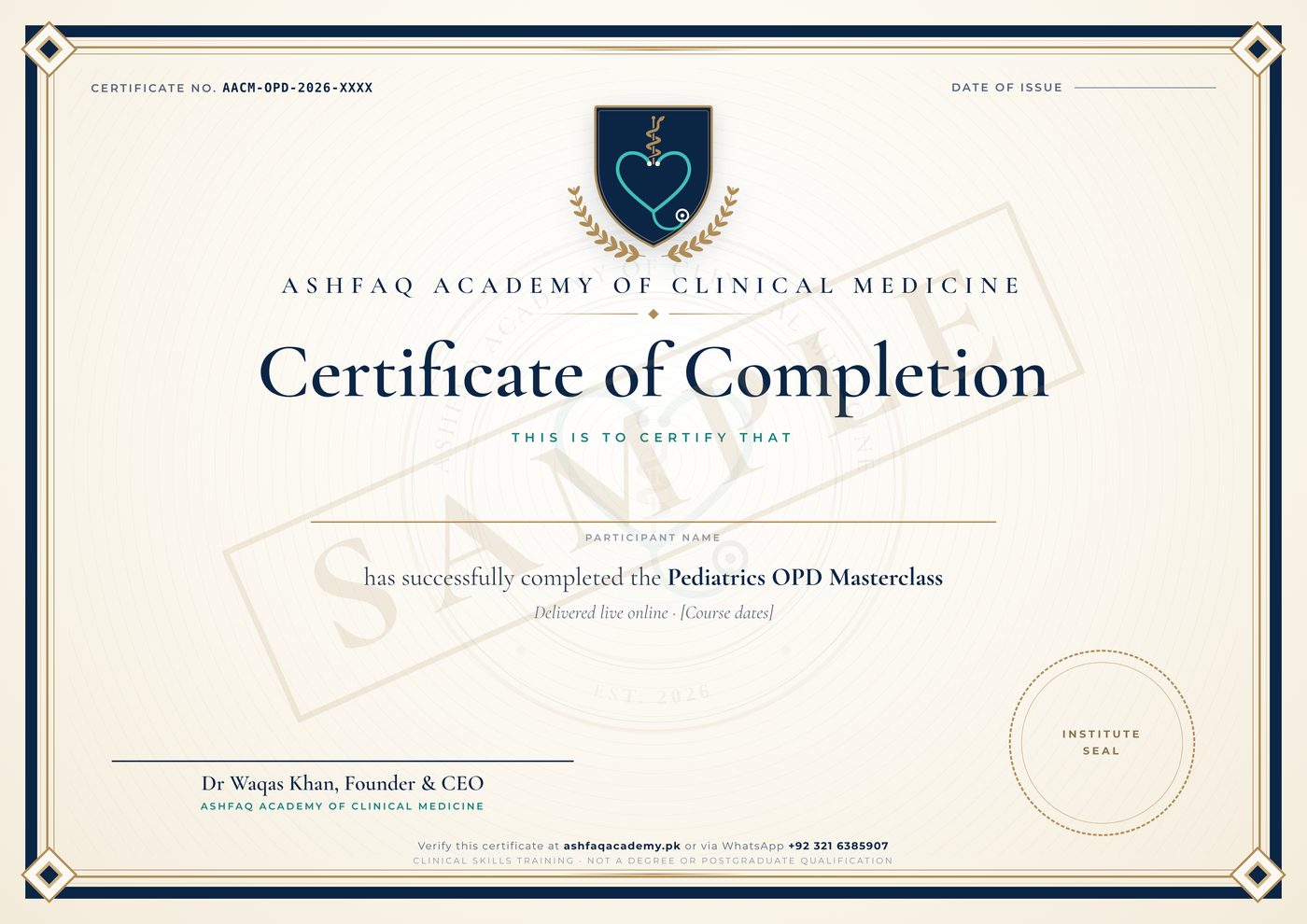
Sample certificate

Sample certificate of completion from Ashfaq Academy of Clinical Medicine, marked SAMPLE SAMPLE
Sample certificate of completion (tap to enlarge). Yours carries your name, the course dates, a certificate number, Dr Waqas Khan's signature and the institute seal. PDF
Dr Waqas Khan, Founder & CEO
Who teaches you

Dr Waqas Khan

Founder & CEO · Head of Paediatrics

  • MBBS
  • FCPS (Paediatrics)

Trained at The Children's Hospital & University of Child Health Sciences, Lahore.

Currently at Bahria International Hospital, Lahore.

Meet the faculty →

Course details

About this course

Overview

A focused, case-based course covering the conditions that fill a paediatric OPD every day. You will learn a structured approach to recognition, the investigations that matter (and the ones you can skip), and clear treatment plans with doses, regimens and durations, following WHO and current international guidance.

Who it's for
  • Medical students in their final years
  • House officers
  • Medical officers in OPD, emergency or general practice
  • Postgraduate trainees in paediatrics or family medicine
  • GPs who see children
  • Nurses and allied health professionals working in paediatric OPDs, wards or community health

Eligibility: Doctors, nurses and allied health professionals.

Dates, timings & fees
StartsModeFeeRegister
15 November 2026
7 days
Live Online PKR 3,000 Register →

Timings: 8–10 PM PKT on Zoom · usually alternate days (8 PM PKT = 7 PM UAE · 6 PM KSA · 3 PM UK (GMT) / 4 PM UK (BST)).

A new batch about every month. Every enrolled student gets 6 months of access to the session recordings. Recorded-only access is also available, with the same 6 months of access: register and choose "Recorded", and we will share the details on WhatsApp.

How you can take it
Curriculum

What we cover

Open a day or module below. Everything is still here — just collapsed so the page stays easy to scan.

  • 7 live sessions on Zoom, usually on alternate days, 8–10 PM Pakistan time: each one is one focused, continuous class, not a series of separate sessions stitched together
  • Every day moves through its topics as a single connected class: presenting complaint, differential, examination clues, red flags, investigations, and the exact management blueprint, before moving to the next topic in the same system
  • Live Q&A embedded throughout each class, with time reserved at the end of every class for open discussion

Day by day

  1. Day 1The Sick Child — Assessment, Triage, Fever & PrescribingConsultation & history, vital signs, examination technique, documentation, PEWS, WHO IMCI, clinical gestalt, fever approach, dengue, typhoid/XDR typhoid, malaria, brucellosis, COVID-19/MIS-C, drug dosing, emergency doses, antibiotic stewardship, prescribing errors2 hours
  2. Day 2Respiratory & ENT MasteryCough classification, pertussis, TB, habit cough, wheeze, asthma diagnosis & GINA management, inhaler technique, bronchiolitis, stridor by age, croup, epiglottitis, foreign body aspiration, recurrent RTIs/immunodeficiency signs, allergic rhinitis, otitis media, tonsils & adenoids2 hours
  3. Day 3Vomiting & DiarrhoeaAge-based vomiting differential (neonatal through adolescent), acute and chronic diarrhoea, bloody diarrhoea and its emergencies2 hours
  4. Day 4Abdominal Pain, Nutrition & HepatologySurgical vs functional abdominal pain, constipation, failure to thrive, malnutrition (SAM/MAM), micronutrient deficiencies, hepatology2 hours
  5. Day 5Neurology, Cardiology, Renal & EndocrineSeizures & epilepsy syndromes, headache, neurodevelopmental disorders (GDD, autism, ADHD), murmurs, Kawasaki disease, syncope, UTI, nephrotic syndrome, short stature, precocious puberty, diabetes, thyroid disease2 hours
  6. Day 6Fever of Unknown Origin, Haematology & RheumatologyFUO approach, HLH, periodic fever syndromes, pallor/anaemia, iron deficiency, thalassaemia, bleeding disorders, lymphadenopathy, JIA, SLE, IgA vasculitis2 hours
  7. Day 7Dermatology, Immunology, Oncology & Adolescent HealthRash morphology, atopic dermatitis, primary immunodeficiency, childhood cancer red flags, adolescent consultation, mental health, functional somatic syndromes, child abuse recognition, vaccine catch-up2 hours

Full curriculum

Tap a day to see every topic.

Day 1The Sick Child — Assessment, Triage, Fever & PrescribingFoundation Day · 2 hours

Learning objectives

  1. Apply a structured, age-appropriate assessment to any child presenting to OPD
  2. Identify red flags requiring immediate referral or escalation
  3. Stratify febrile children accurately using Pakistan-relevant algorithms
  4. Calculate drug doses correctly and avoid the most common prescribing errors

Pediatric Assessment Mastery

The Triadic Consultation — Parent, Child, Doctor
  • The parent is your historian and your patient's most important advocate — engage them first
  • Directed open questions vs structured closed questions: knowing when to switch
  • The silent child tells you more than you think — observe before you touch
  • Age-specific history frameworks: neonate, toddler, school-age, adolescent
  • Gathering collateral from teachers, carers, previous treating physicians
Vital Signs — What's Normal at What Age?
  • Heart rate, respiratory rate, blood pressure, temperature: age-stratified normal ranges
  • The oxygen saturation trap: 96% is NOT fine if the child is working hard to breathe
  • Measuring BP in children: right cuff size, right technique — most doctors get this wrong
  • Capillary refill time: how to do it correctly and what it really tells you
  • Temperature measurement methods: rectal (gold standard in infants), axillary, tympanic — limitations of each
Examination of the Uncooperative Child
  • Save the most distressing examination (throat, ears) for last
  • The 'distraction toolkit': toys, phones, blowing, funny noises
  • Examining the crying infant: what you can still assess and how
  • Parent as surrogate: using the parent's lap, parent's hands as positioning aids
  • The opportunistic exam: respiratory rate in a sleeping child, fontanelle palpation, skin during undressing
Documentation & Medicolegal Aspects
  • What every paediatric OPD note must contain (age, weight, vitals, diagnosis, dose with weight used)
  • Prescription writing: drug name, dose in mg/kg, total dose, frequency, duration, formulation
  • When NOT to write: verbal advice must be documented as 'parent counselled regarding...'
  • Red flag sign-off: document explicitly if referral offered and declined by parents
Clinical pearls & practical tips
  • The 'toxic-looking' child: pallor + tachycardia + poor perfusion + altered behaviour = treat as sepsis until proven otherwise
  • Always weigh the child before prescribing. If no scale is available, use the age-weight formula (age+4)×2 only as a last resort
  • The most important examination in any febrile child is the neurological exam — irritability and a bulging fontanelle kill faster than the fever itself

Triage, Red Flags & Clinical Gestalt

Paediatric Early Warning Signs (PEWS) in OPD
  • Behaviour/consciousness: AVPU scale — Alert, Voice, Pain, Unresponsive
  • Cardiovascular: tachycardia for age, capillary refill >2 seconds, mottled skin, cold peripheries
  • Respiratory: tachypnoea for age, subcostal and intercostal recession, grunting, nasal flaring, head bobbing
  • The 'silent' chest in a wheezing child = obstruction so severe no air is moving — emergency
WHO IMCI Approach — Adapted for Pakistan OPD
  • Assess for danger signs first: unable to drink/breastfeed, vomiting everything, convulsions, lethargic/unconscious
  • Traffic light system: Green = reassure and treat at home; Amber = treat and monitor closely; Red = immediate referral
  • IMCI classifications for common presentations: cough, diarrhoea, fever, ear problems, malnutrition
Clinical Gestalt — Trusting Your Gut
  • 'This child doesn't look right' — validating and operationalising parental and physician instinct
  • Parental concern is a red flag: if a parent says their child has never been this unwell, believe them (NICE NG143; Van den Bruel et al., Lancet 2010)
  • When investigations are normal but the child looks sick: re-examine, repeat vitals, observe 30-60 minutes
  • Chest X-ray does not diagnose pneumonia — your clinical assessment does
Red flags — do not miss
  • Bulging fontanelle + fever = meningitis until proven otherwise
  • Prolonged capillary refill (>3 sec) + tachycardia = impending circulatory failure
  • Stridor at rest in a child who was previously well = foreign body until proven otherwise
  • Infant <3 months with fever 38°C or above = urgent hospital assessment regardless of how well they look
  • Any child with altered consciousness + fever = meningococcal/meningitis protocol — do not delay
  • Petechial rash + fever = meningococcaemia — IM penicillin before any further delay

Fever in Children — Pakistan Context

Approach to Acute Fever
  • Fever is not a disease — it is a symptom; the child's overall appearance matters more than the temperature reading
  • Age-stratified approach: <28 days (admit all), 1-3 months (careful stratification), 3 months to 3 years (NICE fever guidelines), >3 years (clinical assessment-led)
  • Fever without focus (FWF): occult bacteraemia risk, when to do blood culture, urinalysis is mandatory in all febrile children under 2
  • Fever duration as a diagnostic clue: >5 days of continuous fever = always investigate further (Kawasaki, enteric, malignancy)
Dengue Fever — Staging and OPD Management
  • Febrile phase (usually 2-7 days): fever, myalgia, headache, facial flushing — manage as OPD, NS1 antigen positive
  • Critical phase (around defervescence, usually days 3-7, lasting 24-48h): fever may settle but this is dangerous — plasma leakage begins; watch for warning signs
  • Warning signs requiring urgent admission: abdominal pain, persistent vomiting, bleeding, rapid breathing, lethargy, liver >2cm, rising haematocrit with falling platelets
  • Dengue haemorrhagic fever vs dengue shock syndrome: clinical differentiation at the OPD
  • CBC timing: Day 3 onwards; haematocrit rise >20% = impending shock; do not wait for platelet nadir
  • OPD discharge criteria: afebrile for at least 48h without antipyretics, improving clinical status, platelets rising, no warning signs
Typhoid — Changing Landscape in Pakistan
  • Extensively Drug Resistant (XDR) typhoid: fluoroquinolone and 3rd-generation cephalosporin resistance — now endemic in Sindh and spreading
  • Clinical presentation: stepladder fever, relative bradycardia, rose spots (rarely seen), splenomegaly, constipation (early) then diarrhoea
  • Blood culture gold standard but low yield if antibiotics already given; Widal unreliable (false positives common in endemic areas)
  • Treatment of XDR typhoid: azithromycin (oral) for uncomplicated; carbapenems for complicated
  • Complications to watch for: intestinal perforation, encephalopathy, myocarditis — admit for any complication
Malaria in Pakistan
  • Both P. vivax and P. falciparum present; falciparum more common in Sindh and Balochistan, vivax predominates in Punjab/KPK
  • Rapid Diagnostic Test (RDT): high sensitivity, good for rural/quick OPD screening; confirm with thick/thin film
  • P. falciparum danger signs: cerebral malaria, severe anaemia, respiratory distress, haemoglobinuria, hyperparasitaemia
  • Treatment: artemisinin-based combination therapy (ACT) for falciparum; chloroquine for sensitive vivax + primaquine (check G6PD first)
Febrile Child with No Clear Source
  • Urinary tract infection: most common occult bacterial infection in febrile children <2 years — always do urinalysis
  • Sepsis recognition: SIRS criteria adapted for children (temperature >38.5 or <36, tachycardia, tachypnoea, leukocytosis or leukopenia)
  • COVID-19 in children: usually mild; MIS-C (Multisystem Inflammatory Syndrome in Children) presenting 2-6 weeks post-infection — persistent fever + multi-organ involvement
  • Brucellosis: underdiagnosed in Pakistan — rural exposure, animal contact, unpasteurised dairy; insidious onset, undulant fever, hepatosplenomegaly
Clinical pearls & practical tips
  • In dengue, never give aspirin or ibuprofen — risk of bleeding. Paracetamol only for fever management
  • XDR typhoid: if a child from Sindh or Karachi presents with prolonged fever, start azithromycin empirically — do not wait for culture
  • Brucellosis serology (Brucella IgG/IgM or agglutination test): think of it in any child with FUO and livestock exposure
  • Sepsis in children: once you suspect it, start IV fluid bolus and empiric antibiotics within 1 hour — the clock is ticking

Drug Dosing & Prescribing Safety in Paediatrics

Weight-Based Dosing Fundamentals
  • Always use actual body weight; use ideal body weight for obese children to avoid toxicity (aminoglycosides, digoxin)
  • Age-weight formulas only as emergency backup: (age+4)×2 for 1-12 years; birth weight 3.5kg, doubles at 5 months, triples at 1 year
  • Maximum daily doses: always cross-check against adult maximum (e.g. paracetamol: 15mg/kg/dose ×4 but max 1g/dose)
  • Drug dilution and concentration: know how to dilute oral liquid formulations for accurate small-volume dosing
Emergency Drug Doses — Memorise These
DrugIndicationExact Dose
Adrenaline 1:1000Anaphylaxis0.01mg/kg IM (max 0.5mg); i.e. 0.01mL/kg IM, lateral thigh
Diazepam (PR) / Midazolam (buccal)Acute seizureDiazepam 0.3-0.5mg/kg PR (max 10mg); midazolam buccal 0.2-0.3mg/kg (max 10mg) — easier in OPD
Dextrose 10%Hypoglycaemia2-5mL/kg IV bolus; NEVER give 50% dextrose to children
Normal Saline 0.9%Shock / severe dehydration10-20mL/kg bolus IV over 15-30 minutes; reassess after each bolus
HydrocortisoneAcute adrenal crisis2mg/kg IV bolus (max 100mg), then 50-100mg/m²/day divided 6-hourly (about 2mg/kg 6-hourly)
Antibiotic Stewardship in Paediatric OPD
  • URTI in children: >90% viral — no antibiotic needed; amoxicillin is NOT a 'safe' routine choice
  • AOM with bulging tympanic membrane in a child <2 years: amoxicillin 90mg/kg/day for 10 days
  • Community-acquired pneumonia (non-severe): amoxicillin; add azithromycin for atypical coverage if indicated
  • Skin infections: cloxacillin or cefalexin for mild SSTI; remember to dose correctly (cloxacillin 50-100mg/kg/day divided 6-hourly; cefalexin 25-50mg/kg/day)
  • Diarrhoea: no routine antibiotics; exceptions include dysentery (ceftriaxone or azithromycin), cholera (azithromycin), immunocompromised hosts
Common Prescribing Errors to Avoid
  • 10-fold dosing errors: paracetamol 150mg/kg instead of 15mg/kg — know the difference
  • Using '5mL = one teaspoon' without knowing the concentration of the suspension
  • Writing '1 tablet' for paediatric formulations that have adult-strength tablets
  • Prescribing medications contraindicated in children: ciprofloxacin (generally avoided), tetracyclines (<8 years), aspirin (<16 years in febrile illness)
  • Missed renal/hepatic dose adjustment in critically ill children
Exam essentials
  • FCPS-style viva: 'A 6-month-old weighing 7kg presents with a seizure. What dose of midazolam would you give?' — Answer: 1.4-2.1mg buccal
  • Common MCQ trap: maximum dose of paracetamol is 4g/day in adults; in children, the per-dose maximum is 1g
  • Chloramphenicol is avoided in neonates — grey baby syndrome; metronidazole is safe in children
  • Aminoglycosides require renal monitoring; always calculate GFR if prescribing gentamicin for more than 48 hours
Case-based discussions
  • 3-month-old with fever 38.5°C, irritable, fontanelle assessment normal — what is your workup and disposition decision?
  • 6-year-old with 4 days of stepladder fever, relative bradycardia, Sindh resident — XDR typhoid approach and empirical antibiotic choice
  • 18-month-old with rapid breathing, reduced feeding, HR 168 — IMCI-based assessment and triage decision
Day 2Respiratory & ENT MasteryCough, Wheeze, Stridor, TB, Asthma, ENT — The Complete OPD Approach · 2 hours

Learning objectives

  1. Apply a systematic differential diagnosis to cough, wheeze, and stridor by age
  2. Diagnose and manage asthma using current GINA guidelines; counsel on inhaler technique
  3. Recognise TB in children using clinical, radiological, and microbiological approaches
  4. Differentiate innocent from pathological conditions in the upper and lower respiratory tract

Cough — The Master Differential

Cough Classification
  • Acute (<3 weeks): URTI, lower respiratory tract infection, foreign body (always consider), croup
  • Subacute (3-8 weeks): post-infectious, Bordetella pertussis, Mycoplasma pneumoniae
  • Chronic (>8 weeks): asthma, allergic rhinitis with post-nasal drip, GERD, TB, habit cough, anatomical
  • Wet vs dry cough: wet = productive (infection, bronchiectasis, CF); dry = bronchospasm, habit, post-viral, ACE inhibitor (if adolescent on medication)
Pertussis — The 100-Day Cough
  • Classic phases: catarrhal (1-2 weeks, like URTI), paroxysmal (2-8 weeks, whooping, post-tussive vomiting, apnoea in infants), convalescent
  • The 'whoop' is absent in infants <6 months — they present with apnoea or cyanotic spells (more dangerous)
  • PCR nasal swab most sensitive in first 3 weeks; cultures often negative by paroxysmal phase
  • Treatment: azithromycin (5 days) or clarithromycin (7 days); treat household contacts
  • Pakistan context: vaccination uptake gaps, pertussis re-emerging in vaccinated populations due to waning immunity
TB in Children — The Pakistan Imperative
  • Primary complex presentation: fever, weight loss, night sweats, cervical lymphadenopathy, and history of contact with an adult TB case
  • Diagnostic challenge: children rarely produce sputum; diagnosis is often clinical-radiological-epidemiological
  • TST (Mantoux): >10mm significant in Pakistan regardless of BCG status; >5mm in immunocompromised
  • IGRA (Quantiferon-TB Gold): preferred in BCG-vaccinated children >5 years; less affected by BCG background
  • CXR findings: hilar lymphadenopathy, primary focus (Ghon lesion), miliary pattern, consolidation, pleural effusion
  • Diagnosis of childhood TB: Stegen-Toledo score system — contact, symptoms, TST, CXR, response to treatment
  • Drug-resistant TB: MDR, XDR — suspect if treatment failure or contact with known DR-TB; refer to tertiary centre
  • Latent TB infection treatment: isoniazid preventive therapy for 6 months for household contacts <5 years or immunocompromised
Psychogenic/Habit Cough
  • Typically a dry, loud, honking or barking cough; completely absent during sleep (pathognomonic)
  • Often a teenager, competitive academic environment, significant school absence
  • Reassure parents: no underlying disease; explanation + breathing exercises; refer to child psychologist if persistent
Clinical pearls & practical tips
  • In any child with chronic cough and failure to thrive, think TB, cystic fibrosis, and immunodeficiency — not just recurrent chest infections
  • Post-infectious cough after a viral URTI can last 3-4 weeks — this is normal and does not need antibiotics
  • Habit cough disappears the moment the child is distracted and is completely absent in sleep — this history alone makes the diagnosis

Wheeze, Asthma & Bronchiolitis

First Episode Wheeze — Not Always Asthma
  • Differential for first wheeze in a toddler: bronchiolitis (RSV), viral-triggered wheeze, bronchopneumonia, cardiac wheeze, foreign body
  • Cardiac wheeze: look for tachycardia, hepatomegaly, poor feeding, failure to thrive — refer for echo
  • Age matters: <1 year = bronchiolitis most likely; 1-5 years = viral-triggered or early asthma; >5 years = asthma until proven otherwise
Asthma Diagnosis in OPD
  • GINA 2026: diagnosis based on characteristic symptoms (wheeze, cough, shortness of breath) plus variable expiratory airflow limitation
  • History of atopy (eczema, allergic rhinitis, food allergy, family history): strongest predictor of true asthma
  • PRAM (Preschool Respiratory Assessment Measure) and Pediatric Asthma Severity Score for acute assessment
  • Spirometry in cooperative children >6 years: FEV1/FVC below the lower limit of normal for age at baseline, plus reversibility with bronchodilator
  • In children <5 years: diagnosis is clinical — trial of short-acting bronchodilator and ICS; reassess response
GINA-Based Management in OPD
  • Step 1 (symptoms <2 days/week): age ≥12 years — as-needed low-dose ICS-formoterol; age 6-11 years — low-dose ICS taken whenever SABA is taken (as-needed-only ICS-formoterol is for ≥12 years)
  • Step 2 (>2 days/week): regular low-dose ICS + as-needed SABA; montelukast as add-on in rhinitis-comorbid cases
  • Step 3 (moderate persistent): medium-dose ICS or low-dose ICS + long-acting beta agonist (LABA); age 6-11 years: very-low-dose ICS-formoterol maintenance-and-reliever therapy (MART) is an option from Step 3; ICS-LABA combination for children >5 years only
  • Step 4 (severe): high-dose ICS-LABA; refer to tertiary care for biologics consideration
  • Asthma Control Test (ACT) and Children's ACT (cACT): use at every visit to assess control and adjust step
  • Written Asthma Action Plan: every patient must leave with one — green, yellow, red zone guidance
Inhaler Device Training — The Skill Most OPD Doctors Skip
  • MDI + spacer: gold standard for all children <12 years; children >8 years can use MDI without spacer if technique is verified
  • Nebulisation: reserve for severe acute episodes; not superior to MDI+spacer in mild-moderate exacerbations
  • Turbuhaler and Accuhaler: for children >6 years who can generate adequate inspiratory flow
  • Practical teaching: demonstrate on yourself first, then watch the parent/child do it, then correct errors
Bronchiolitis
  • RSV bronchiolitis: peak age 2-6 months, winter months, bilateral wheeze + crackles, fever variable
  • WHO criteria for admission: oxygen saturation <92% on room air, respiratory rate >70, poor feeding, apnoea
  • Treatment: supportive — nasal saline drops + suction, positioning, adequate hydration, oxygen if needed
  • Salbutamol is NOT evidence-based in bronchiolitis; high-flow nasal oxygen in a hospital setting for moderate-severe cases
  • Palivizumab prophylaxis: for high-risk infants (prematurity, congenital heart disease, immunocompromised)
Clinical pearls & practical tips
  • The 'silent chest' in a known asthmatic is a life-threatening emergency — absent wheeze means no air movement, not improvement
  • ICS use in children requires rinsing the mouth after use to prevent oral candidiasis; spacers reduce oropharyngeal deposition
  • RSV bronchiolitis in a 2-month-old with apnoea: admit regardless of oxygen saturation — apnoea alone is an admission criterion

Stridor & Upper Airway Emergencies

Stridor — Approach by Age
  • Inspiratory stridor: obstruction above or at the glottis (larynx); expiratory stridor: lower trachea/bronchi; biphasic: subglottic or tracheal
  • Neonatal stridor: laryngomalacia (resolves by 18 months), vocal cord paralysis, subglottic stenosis, vascular ring
  • Toddler stridor (acute): croup most common; foreign body; bacterial tracheitis; peritonsillar/retropharyngeal abscess
  • Croup (laryngotracheobronchitis): barking cough + inspiratory stridor + hoarse voice; viral aetiology (parainfluenza) now dominant since diphtheria's elimination by vaccination
Croup Management
Westley ScoreSeverityManagement
≤2MildOral dexamethasone 0.15mg/kg, single dose, manage at home
3-5ModerateOral dexamethasone 0.15-0.6mg/kg single dose (commonly 0.6mg/kg, max 16mg); nebulised budesonide 2mg is an alternative; add nebulised adrenaline for moderate-to-severe distress
6-11SevereNebulised adrenaline 1:1000, 5mL (no dilution) + dexamethasone; observe 2-4 hours post-adrenaline for rebound
≥12Impending respiratory failureNebulised adrenaline 1:1000, 5mL + dexamethasone; call senior, anaesthetic and PICU help immediately for airway support
  • Nebulised adrenaline onset 10-15 minutes, duration approximately 2 hours — must observe for rebound 2-4 hours post-dose
  • Prednisolone 1mg/kg as an alternative to dexamethasone where unavailable
  • Epiglottitis: sudden onset, high fever, toxic appearance, drooling, tripod position, NO cough — DO NOT examine the throat; immediate ENT and anaesthetic team; no tongue depressor
  • Bacterial tracheitis: looks like severe croup but does not respond to croup treatment; toxic, copious secretions, requires intubation
Foreign Body Aspiration
  • Clinical clue: sudden choking episode (may be witnessed or unwitnessed), then apparent recovery — the 'honeymoon period'
  • Examination: unilateral air trapping or collapse, asymmetric breath sounds, hyperresonance on the affected side
  • CXR: inspiratory and expiratory films to detect unilateral air trapping (ball-valve effect); most objects are radiolucent
  • Management: if choking — Heimlich manoeuvre for children >1 year; back blows + chest thrusts for infants <1 year; rigid bronchoscopy if stable
Red flags — do not miss
  • Epiglottitis: do NOT examine the throat with a tongue depressor — can precipitate complete laryngospasm and respiratory arrest
  • A child with stridor who suddenly goes quiet and limp: complete obstruction — CPR position, call for help, prepare to intubate
  • Retropharyngeal abscess: fever + difficulty swallowing + 'hot potato' voice + neck stiffness; CT neck to confirm; surgical drainage

Recurrent RTIs, ENT & Allergic Rhinitis

When to Worry About Recurrent Respiratory Infections
  • Normal for children in daycare: 8-12 viral URTIs per year; school-age children: 5-7 per year — NOT pathological
  • Red flags for an underlying cause: infections requiring IV antibiotics, caused by unusual organisms, involving unusual sites, failure to thrive, persistent oral candidiasis, family history of immunodeficiency
  • The Jeffrey Modell Foundation 10 warning signs of primary immunodeficiency: ≥4 new ear infections within 1 year, ≥2 serious sinus infections within 1 year, ≥2 months on antibiotics with little effect, ≥2 pneumonias within 1 year, failure of an infant to gain weight or grow normally, recurrent deep skin or organ abscesses, persistent thrush in the mouth or fungal infection on the skin, need for IV antibiotics to clear infections, ≥2 deep-seated infections including septicaemia, family history of primary immunodeficiency
Allergic Rhinitis — Pakistan's Hidden Epidemic
  • Often misdiagnosed as 'chronic sinusitis' or 'adenoids': rhinorrhoea, sneezing, nasal congestion, itchy eyes
  • Allergen triggers in Pakistan: house dust mite (most common), cockroach, moulds (Aspergillus), grass pollens
  • Rhinitis-asthma connection: 'one airway, one disease'; treating rhinitis improves asthma control
  • Treatment stepladder: intranasal steroid (mometasone, fluticasone) is first-line; oral non-sedating antihistamine as adjunct; allergen immunotherapy for moderate-severe refractory cases
Otitis Media & Hearing Loss
  • Acute otitis media (AOM): fever, ear pain, bulging erythematous tympanic membrane; watchful waiting for 48-72h in children >2 years if not severe; amoxicillin 90mg/kg/day for <2 years or bilateral/perforated disease
  • Otitis media with effusion ('glue ear'): conductive hearing loss; the commonest cause of hearing impairment in Pakistani children; most resolves spontaneously; grommets if >3 months bilateral
  • Hearing loss screening: ask about speech delay, not responding to name by 12 months, not turning to sounds — refer for BERA or OAE
  • Recurrent AOM (>4/year): investigate adenoid hypertrophy, atopy, immunodeficiency; consider referral for grommet insertion
Tonsils & Adenoids
  • Recurrent tonsillitis: Paradise criteria for tonsillectomy — 7 episodes in the past year, or 5/year for 2 years, or 3/year for 3 years
  • Adenoid hypertrophy: mouth breathing, snoring, hyponasal voice, recurrent AOM, failure to thrive
  • Paediatric obstructive sleep apnoea: snoring + apnoeic episodes + daytime sleepiness + behavioural problems; adenotonsillectomy is first-line treatment
  • Peritonsillar abscess: unilateral swelling, uvular deviation, muffled voice, trismus — emergency ENT referral
Case-based discussions
  • 18-month-old with acute onset wheeze + low-grade fever + bilateral crackles — is this bronchiolitis or asthma? Workup and management
  • 5-year-old with 3-month history of dry cough worse at night, improves with salbutamol, history of eczema — stepwise asthma management plan
  • 3-year-old with sudden barking cough and inspiratory stridor at 2am, previously well, afebrile — Westley score assessment and OPD management
Day 3Vomiting & DiarrhoeaAge-Based Differentials, Red Flags and the Complete OPD Approach · 2 hours

Learning objectives

  1. Construct an age-appropriate differential diagnosis for vomiting
  2. Distinguish surgical emergencies from benign, self-limiting causes of vomiting
  3. Manage acute diarrhoea with exact fluid, zinc, and antibiotic protocols
  4. Recognise the chronic diarrhoea differentials that are most often missed, and the bloody diarrhoea presentations that are genuine emergencies

Vomiting — Age-Based Differential Diagnosis

Neonatal & Infant Vomiting
  • Bilious vomiting at any age = surgical emergency until proven otherwise; malrotation, volvulus, intestinal atresia
  • Pyloric stenosis: male, first-born, 2-8 weeks old; projectile non-bilious vomiting post-feed; olive-shaped mass in epigastrium; hypochloraemic hypokalaemic metabolic alkalosis
  • Gastro-oesophageal reflux (GOR): effortless regurgitation in a well-growing, thriving infant = physiological; distinguish from GERD (disease)
  • GERD in infants: poor weight gain, excessive crying, arching, feeding refusal, recurrent aspiration pneumonia — warrants treatment
  • Cow's milk protein allergy (CMPA): vomiting + diarrhoea + blood in stool in a formula-fed infant; trial of extensively hydrolysed or amino acid formula
Vomiting in Toddlers & Older Children
  • Acute vomiting: gastroenteritis, UTI, otitis media (don't miss it), appendicitis, intussusception, meningitis, DKA
  • Cyclic vomiting syndrome (CVS): stereotypical episodes of severe vomiting (not diarrhoea) with complete wellness between episodes; strong family/personal migraine history; Rome IV criteria
  • Functional nausea: pervasive, school-related, normal investigations; gastric emptying study may be abnormal
  • Eosinophilic oesophagitis: dysphagia, food impaction, chest pain, poor response to PPI; needs endoscopy + biopsy; elemental or elimination diet
  • Raised ICP: vomiting on waking, no preceding nausea, associated headache, papilloedema — urgent neuro-imaging
Red flags — do not miss
  • Bilious vomiting in a neonate = surgical emergency. Do not delay imaging (upper GI contrast study). Malrotation with volvulus can lead to total midgut necrosis in hours
  • Cyclic vomiting that starts in adulthood or is atypical in pattern: consider mitochondrial disease, metabolic disorders, and superior mesenteric artery syndrome
  • Haematemesis in any child: admit, stabilise, urgent GI referral — peptic ulcer, varices, Mallory-Weiss tear all possible
Clinical pearls & practical tips
  • Exact blueprint for antiemetic use in OPD: ondansetron (0.15mg/kg/dose, max 8mg) is first-line for acute gastroenteritis-related vomiting where oral rehydration is failing; metoclopramide is reserved for migraine-associated vomiting given its extrapyramidal risk in young children

Diarrhoea — Acute to Chronic

Acute Diarrhoea — Beyond ORS
  • WHO definition: 3 or more loose stools per 24 hours; acute = <14 days
  • Dehydration assessment: mild (<5%) = thirsty, normal exam; moderate (5-10%) = sunken eyes, reduced skin turgor, tachycardia; severe (>10%) = shock
  • ORS: WHO low-osmolality ORS (245 mOsm/L); 50-100mL/kg over 3-4 hours for mild-moderate dehydration
  • Zinc supplementation: 10mg/day (<6 months), 20mg/day (>6 months) for 10-14 days — reduces severity and duration
  • No routine antibiotics: give antibiotics only for dysentery (E. coli, Shigella), suspected cholera, immunocompromised hosts, neonates, or severe malnutrition
Chronic Diarrhoea — The Differentials That Get Missed
  • Coeliac disease: autoimmune gluten enteropathy; presentations include chronic diarrhoea, abdominal distension, poor weight gain, short stature, iron deficiency anaemia, aphthous ulcers, dermatitis herpetiformis
  • Coeliac diagnosis: IgA tissue transglutaminase (tTG-IgA) antibodies (check total IgA first for IgA deficiency); Marsh grading on duodenal biopsy
  • IBD in children: Crohn's disease (any segment, transmural, skip lesions, perianal disease) vs ulcerative colitis (continuous, mucosal, from the rectum); PCDAI for Crohn's activity
  • Toddler's diarrhoea: 1-4 years old, frequent loose stools with undigested food, no failure to thrive, normal growth — functional; reassure, increase fat in diet, reduce fruit juice
  • Post-infectious enteropathy: persistent diarrhoea >14 days after acute gastroenteritis — secondary lactose intolerance, disrupted microbiome
  • Giardiasis: frothy, greasy, malodorous stools; duodenal aspirate or stool PCR; metronidazole treatment
  • Short bowel syndrome, microvillous inclusion disease, IPEX syndrome: rare but life-threatening causes of protracted diarrhoea in infancy
Bloody Diarrhoea — When to Panic
  • E. coli O157:H7 (STEC): bloody diarrhoea + abdominal pain; HUS triad: microangiopathic haemolytic anaemia + thrombocytopenia + AKI — do NOT give antibiotics (increases HUS risk)
  • Shigella dysentery: fever + bloody mucoid stool + tenesmus; treat with azithromycin in Pakistan (ciprofloxacin resistance increasing)
  • Intussusception: 'redcurrant jelly' stool (blood + mucus), colicky abdominal pain with periods of wellness, palpable sausage-shaped mass; ultrasound diagnostic; pneumatic/hydrostatic reduction
  • Henoch-Schönlein purpura (IgA vasculitis): bloody diarrhoea + colicky pain + rash on buttocks/lower limbs + arthritis; mesenteric vasculitis
Clinical pearls & practical tips
  • In coeliac disease, check total serum IgA before interpreting tTG-IgA. IgA deficiency (roughly 1:300) causes false-negative results — use an IgG-based antibody test in this case
  • In STEC colitis (O157): NO ANTIBIOTICS — antibiotics increase Shiga toxin release and HUS risk. Supportive care only, with close monitoring of renal function
  • Toddler's diarrhoea parents are often told their child is lactose intolerant and given lactose-free formula unnecessarily. The diagnostic clue that argues against this is normal growth
Case-based discussions
  • 2-year-old with 6 weeks of diarrhoea, abdominal distension, and poor weight gain despite adequate intake — coeliac disease vs cow's milk protein allergy vs giardiasis workup
  • 4-year-old with sudden colicky abdominal pain, drawing legs up, redcurrant jelly stool — exact diagnostic pathway and management blueprint
Day 4Abdominal Pain, Nutrition & HepatologySurgical Abdomen, Functional Pain, Malnutrition and Liver Disease in OPD · 2 hours

Learning objectives

  1. Identify the surgical abdomen and apply validated clinical scoring tools to avoid missed or delayed diagnosis
  2. Distinguish organic from functional recurrent abdominal pain using Rome IV criteria
  3. Assess and manage malnutrition and failure to thrive in OPD using WHO-based protocols
  4. Recognise important liver conditions presenting in children, including the treatable causes not to miss

Abdominal Pain & Constipation

Acute Abdominal Pain — Not Missing the Surgical Abdomen
  • Appendicitis: the most common surgical emergency in children; classic presentation in older children (periumbilical pain migrating to RIF + fever + anorexia); atypical in young children (vomiting, generalised pain, often perforated by presentation)
  • Pediatric Appendicitis Score (PAS, Samuel 2002): cough/percussion/hopping tenderness in RIF (2), RIF tenderness (2), migration of pain to RIF (1), anorexia (1), nausea/vomiting (1), fever ≥38°C (1), leukocytosis >10,000/mm³ (1), neutrophilia >7,500/mm³ (1) — total 10; score >6 = high risk
  • Mesenteric adenitis: follows a URTI, diffuse or periumbilical tenderness, cervical lymphadenopathy; ultrasound shows enlarged mesenteric nodes; self-limiting
  • Intussusception: peak 3 months to 3 years; intermittent colicky screaming + drawing up knees + pallor; 'dance sign' on palpation; ultrasound is the gold standard
  • Ovarian torsion: always consider in girls with acute abdominal pain; rapid diagnosis with Doppler ultrasound; time-critical for ovarian salvage
Recurrent Abdominal Pain — The Functional Diagnosis
  • Rome IV criteria for Functional Abdominal Pain Disorder (FAPD): pain at least 4 days/month for 2 months, no structural/biochemical cause, associated with functional symptoms
  • Subtypes: IBS in children (pain with altered bowel habit), functional dyspepsia (meal-related pain, early satiety, nausea), abdominal migraine (episodic severe pain with vomiting, pallor, strong family migraine history), functional abdominal pain disorder (NOS)
  • School avoidance is a major feature and a perpetuating factor — address this directly with parents
  • Management: biopsychosocial model — dietary modifications (low FODMAP for IBS), cognitive behavioural therapy, tricyclic antidepressants in severe refractory cases
Constipation — Functional vs Organic
  • Functional constipation: the most common cause; Rome IV definition — 2 or more of the following for at least 1 month (in children ≥4 years, occurring at least once a week for at least 1 month): 2 or fewer defecations/week, painful defecation, retentive posturing, soiling, large stool in rectum, large diameter stools
  • Hirschsprung's disease (HSCR) red flags: failure to pass meconium beyond 48h, ribbon stools, gross abdominal distension, failure to thrive, enterocolitis
  • HSCR vs functional: HSCR presents from birth with no soiling (a sentinel sign) and an empty rectum on exam, confirmed by positive suction rectal biopsy; functional constipation typically has onset after the first year, associated soiling, and a loaded rectum
  • Disimpaction: oral (high-dose PEG 1-1.5g/kg/day for 3-6 days) or rectal (phosphate enema if oral fails)
  • Maintenance: PEG (polyethylene glycol) 0.4g/kg/day, titrated; continue for 3-6 months minimum
Clinical pearls & practical tips
  • Appendicitis in children under 5 years presents differently — vomiting and generalised abdominal pain with peritoneal signs; by the time they are brought to OPD, many have already perforated
  • In functional constipation, soiling (encopresis) is not deliberate — educate parents to prevent punishment and shaming, which worsen the problem
  • Abdominal migraine is severely under-recognised in Pakistani OPDs — episodic severe abdominal pain + vomiting + pallor + family history of migraine should be considered before labelling this FUO or intestinal spasm

Nutrition, Failure to Thrive & Micronutrient Deficiency

Failure to Thrive — The Systematic Approach
  • Definition: weight below the 3rd centile, crossing 2 major centile lines downward, or weight-for-height below 70%
  • Organic causes: inadequate intake (GERD, cleft palate, neurodisability), malabsorption (coeliac, IBD, CF, SIBO), increased losses (chronic diarrhoea), increased demand (chronic infection, congenital heart disease, metabolic disease)
  • Non-organic causes: incorrect formula preparation, feeding difficulties, neglect, poverty — the most common cause globally
  • Investigations: basic screen (CBC, U&E, LFTs, TFTs, tTG-IgA, urine MC&S, zinc level, vitamin D); further tests guided by clinical suspicion
Malnutrition in Pakistan — SAM & MAM
  • Severe Acute Malnutrition (SAM): MUAC <11.5cm in children 6-59 months, OR oedema, OR weight-for-height Z-score <-3; admit for F-75, then F-100 or therapeutic food
  • Moderate Acute Malnutrition (MAM): MUAC 11.5-12.5cm, OR weight-for-height Z-score -2 to -3; managed with community-based supplementary feeding
  • RUTF (Ready-to-Use Therapeutic Food, e.g. Plumpy'Nut): approximately 500 kcal/packet; dosed at approximately 200 kcal/kg/day during the catch-up growth phase
  • Complications of SAM: hypoglycaemia, hypothermia, sepsis, anaemia, electrolyte disturbance; cautious, staged fluid management is essential in severe malnutrition
Key Micronutrient Deficiencies
DeficiencyRecognitionTreatment Blueprint
Iron deficiency anaemiaMost common nutritional deficiency worldwide and in PakistanElemental iron 3-6mg/kg/day for 3 months; recheck Hb at 4 weeks, ferritin at 3 months
Vitamin D deficiency / ricketsHigh prevalence in Pakistan — exclusive breastfeeding without supplementation, dark skin, low sun exposure, veiled mothers; rachitic rosary, Harrison's groove, bowing of legsHigh-dose D3 loading, then maintenance dosing
Zinc deficiencyAcrodermatitis enteropathica, frequent diarrhoea, impaired wound healing, poor growthElemental zinc 1mg/kg/day
Vitamin B12 deficiencyVegetarian/vegan mothers, exclusively breastfed infants; developmental regression, hypotonia, megaloblastic anaemiaIM or high-dose oral B12

Liver & Hepatology in OPD

Hepatomegaly — Approach
  • Confirm it is genuine hepatomegaly (measure liver span from dullness to the scratch sign) vs a Riedel's lobe or a pushed-down liver
  • Tender hepatomegaly: hepatitis (A, B, E), abscess, cardiac (right heart failure), storage disease
  • Non-tender hepatomegaly: storage diseases (Gaucher's, Niemann-Pick), glycogen storage disease, haematological causes (thalassaemia, sickle cell, lymphoma), fatty liver (MASLD)
  • Hepatosplenomegaly: portal hypertension, haematological disease, storage disease, infections (CMV, EBV, malaria)
Hepatitis in Children
  • Hepatitis A: the most common cause of acute hepatitis in Pakistani children; food/waterborne; generally self-limiting; admit if coagulopathy, encephalopathy, or ALT >10x normal
  • Hepatitis B in children: vertical (perinatal) transmission is most common; asymptomatic carrier state common; HBsAg + HBeAg = high infectivity; treatment with entecavir or tenofovir for eligible patients
  • Hepatitis C: vertical transmission, blood transfusion; now treated in children >3 years with sofosbuvir/ledipasvir or similar DAA regimens — cure rates >95%
Wilson's Disease — The Treatable Cause Not to Miss
  • Autosomal recessive; copper accumulation in liver, brain, and cornea; presents between 5 and 35 years
  • Presentations: unexplained liver disease (hepatitis, cirrhosis), neurological symptoms (dysarthria, tremor, behaviour change), acute haemolytic anaemia with Coombs-negative haemolysis
  • Kayser-Fleischer rings: golden-brown corneal deposits seen on slit lamp; present in >90% of neurological Wilson's disease, 65% of hepatic presentations
  • Diagnosis: low serum ceruloplasmin (<0.2g/L), elevated 24-hour urine copper, liver biopsy copper quantification
  • Treatment: D-penicillamine or trientine (chelation); zinc for maintenance; liver transplant for acute liver failure
MASLD in Children — The Growing Epidemic
  • Metabolic dysfunction-Associated Steatotic Liver Disease (MASLD, formerly NAFLD): increasing in Pakistani children with obesity and type 2 diabetes
  • Screen obese children and adolescents with ALT every 2 years; MASLD diagnosis by ultrasound plus exclusion of other causes
  • Management: weight loss (primary treatment), physical activity, dietary modification; metformin for concurrent T2DM
Case-based discussions
  • 6-year-old with recurrent abdominal pain every 2-3 weeks, 5 school days missed in the past month, no organic findings — functional abdominal pain management approach
  • 10-year-old with pallor, joint pain, and hepatomegaly — Wilson's disease, storage disease, or haematological malignancy? Approach to workup
Day 5Neurology, Cardiology, Renal & EndocrineSeizures, Headache, Murmurs, Nephrology, Diabetes, Growth · 2 hours

Learning objectives

  1. Classify and manage seizures; differentiate febrile seizures from epilepsy
  2. Distinguish innocent from pathological heart murmurs; identify Kawasaki disease
  3. Manage UTI and nephrotic syndrome in OPD; recognise renal emergencies
  4. Approach growth disorders, diabetes, and thyroid disease in children

Paediatric Neurology in OPD

Seizures — Classification and OPD Approach
  • ILAE 2025 classification: focal (consciousness preserved vs impaired), generalised (absence, generalised tonic-clonic and other generalised types such as myoclonic, atonic, tonic, clonic and negative myoclonus), unknown whether focal or generalised, and unclassified
  • New-onset seizure workup: glucose FIRST (always), electrolytes (Na, Ca, Mg), full blood count; LP if meningitis suspected; EEG after a 2nd unprovoked seizure; MRI for focal seizures
  • When to start an AED: after a 2nd unprovoked seizure, OR after the 1st seizure if high recurrence risk (structural brain abnormality, EEG abnormality, nocturnal seizure, focal seizure)
Febrile Seizures — Counselling Parents Correctly
  • Simple febrile seizure: <15 minutes, generalised, occurs once in 24 hours, full recovery; no AED needed; EEG and LP not routinely indicated
  • Complex febrile seizure: focal, >15 minutes, more than once in 24 hours, prolonged postictal period; investigate for meningitis or a structural cause
  • Recurrence risk: approximately 30% overall; higher with first seizure under 1 year, low-grade fever at the time, or a family history of febrile seizures
  • Prognosis: risk of epilepsy is under 2% with simple febrile seizures; only modestly higher with complex febrile seizures
  • Parental education: seizure first aid (lateral position, no tongue depressor, time the seizure, do not restrain), buccal midazolam prescription for home use
Epilepsy Syndromes to Know in OPD
  • Childhood absence epilepsy: 4-8 years, brief (5-30 second) staring spells with eyelid fluttering; precipitated by hyperventilation; EEG shows 3Hz spike-wave; ethosuximide is first-line
  • Juvenile myoclonic epilepsy (JME): morning myoclonus + generalised tonic-clonic seizures + possibly absence seizures; EEG shows 4-6Hz polyspike-wave; valproate first-line (caution in girls of reproductive age)
  • West syndrome (infantile spasms): 4-12 months; brief flexion spasms in clusters; EEG shows hypsarrhythmia; vigabatrin + ACTH; guarded prognosis
  • Dravet syndrome: SCN1A mutation; fever-triggered prolonged seizures in the first year of life; valproate is used; AVOID sodium channel blockers (carbamazepine, lamotrigine)
Headache in Children — Red Flags vs Benign
  • SNOOP4 red flags: Systemic symptoms, Neurological signs, Onset sudden, Older patient (pattern change), Positional, Progressive, Precipitated by Valsalva, Papilloedema
  • Migraine in children: ICHD-3 criteria — 5 attacks, 2-72 hours each, 2 of (unilateral, pulsating, moderate/severe, worse with activity), 1 of (nausea/vomiting, photo/phonophobia); childhood migraine is often bilateral and shorter than adult migraine
  • Migraine treatment: acute — ibuprofen 10mg/kg (most effective), sumatriptan nasal spray for children >12 years; antiemetic (metoclopramide); preventive for >4 attacks/month — topiramate, amitriptyline, propranolol
  • Pseudotumour cerebri (IIH): obese adolescent girls, vitamin A excess, minocycline; daily headache + pulsatile tinnitus + diplopia (6th nerve palsy) + papilloedema; LP opening pressure >25cmH2O; acetazolamide
  • Tension-type headache: bilateral, pressing/tightening, no vomiting; analgesics + sleep hygiene + reduced screen time
  • Medication overuse headache (MOH): headache >15 days/month, analgesic use >10 days/month; withdraw the offending medication
Exam essentials
  • Febrile seizures NEVER need routine EEG or LP unless meningitis features are present — this is a common exam trick
  • JME is a lifelong condition requiring ongoing AEDs; 90% relapse if medication is stopped — do not discontinue even in young adulthood
  • IIH red flags for vision: if visual fields are affected, urgent ophthalmology + neurology review to prevent permanent visual loss
  • Status epilepticus protocol: midazolam IV/buccal first-line; lorazepam as an alternative; levetiracetam IV for second-line management

Neurodevelopmental Disorders in OPD

Global Developmental Delay & Intellectual Disability
  • GDD: significant delay (>2 SD below the mean) in 2 or more developmental domains in children under 5 years
  • Workup: chromosomal microarray (highest-yield genetic test), metabolic screen (thyroid, amino acids, organic acids, ammonia), MRI brain, hearing/vision assessment, FISH for specific syndromes if suspected
  • Treatable causes to actively exclude: phenylketonuria (heel prick screen), congenital hypothyroidism, biotinidase deficiency, pyridoxine-dependent epilepsy
Autism Spectrum Disorder — Recognition & Early Referral
  • ASD red flags (modified CHAT): no babbling/pointing/waving by 12 months, no single words by 16 months, no two-word phrases by 24 months, any regression at any age
  • M-CHAT-R/F (Modified Checklist for Autism in Toddlers, Revised with Follow-Up): screening tool at 18 and 24 months; score 0-2 = low risk; 3-7 = positive screen — complete the Follow-Up interview and refer if still positive; ≥8 = high risk, refer directly
  • OPD role: screen, refer to a developmental paediatrician/child psychologist for formal assessment, support parents, early intervention (ABA, speech therapy)
  • Associated conditions: intellectual disability (50%), epilepsy (25-30%), ADHD (50%), anxiety
ADHD — OPD Diagnosis and Management
  • DSM-5: 6 or more symptoms of inattention AND/OR hyperactivity-impulsivity, present for >6 months, in 2 or more settings, onset before 12 years, causing functional impairment
  • Inattentive presentation: daydreaming, forgetful, losing things, not following instructions — often missed, especially in girls
  • Hyperactive-impulsive presentation: fidgeting, leaving seat, running/climbing, talking excessively, interrupting
  • Comorbidities to screen for: anxiety, depression, oppositional defiant disorder, specific learning disability
  • Treatment: psychoeducation first; behavioural therapy; methylphenidate (start 5mg in the morning, titrate up, monitor weight, heart rate, blood pressure); lisdexamfetamine as an alternative
  • Methylphenidate monitoring: weight, height, BP, HR every 3 months; consider medication holidays in summer for growth rebound
Clinical pearls & practical tips
  • Do not tell parents their child 'will grow out of' ADHD — in some form, 70% of childhood ADHD persists into adulthood
  • Developmental regression is always pathological — any child who loses previously acquired milestones needs urgent workup (Rett syndrome, Landau-Kleffner syndrome, metabolic disease)
  • In a poorly controlled epileptic child on AEDs, always check compliance and drug levels before escalating treatment

Cardiology & Renal in OPD

Heart Murmurs — Innocent vs Pathological
  • Features of innocent murmurs (the 7 S's): Soft (<3/6), Systolic only, Short, Sensitive to position (decreases on sitting/standing), no radiation (no Spread), no Symptoms, no Structural abnormality on CXR or ECG
  • Still's murmur: the most common innocent murmur; low-pitched, musical, vibratory quality; louder when supine, quieter on sitting
  • Venous hum: continuous murmur (systole + diastole) beneath the clavicles; disappears with jugular compression or turning the head
  • Pathological features: harsh, pansystolic, radiates, associated with a thrill, right-sided, diastolic, or accompanied by symptoms (cyanosis, poor feeding, failure to thrive, syncope)
  • When to refer: any doubt, a diastolic murmur, a loud systolic murmur, any accompanying symptom, an abnormal CXR or ECG, or a family history of HOCM or Marfan syndrome
Kawasaki Disease — Complete and Incomplete
  • Classic (complete) Kawasaki: fever >5 days plus 4 of 5 criteria — (1) bilateral non-exudative conjunctival injection, (2) oral changes (strawberry tongue, fissured lips), (3) polymorphous rash, (4) cervical lymphadenopathy >1.5cm, (5) extremity changes (erythema/oedema of palms/soles, periungual desquamation)
  • Incomplete Kawasaki: fever >5 days plus 2-3 criteria plus an echo abnormality; more common in infants <6 months — and this group carries a higher risk of coronary artery aneurysm
  • MIS-C: fever plus multisystem inflammation 2-6 weeks after COVID-19; shares features with Kawasaki disease; cardiac involvement, rash, elevated inflammatory markers; treat with IVIG plus steroids
  • Treatment: IVIG 2g/kg as a single dose plus high-dose aspirin (80-100mg/kg/day) until afebrile; then low-dose aspirin for 6-8 weeks, or longer if coronary involvement is present
Syncope in Children — Approach
  • Vasovagal (neurocardiogenic) syncope: the most common cause; triggered by prolonged standing, pain, an emotional trigger, or a hot environment; a prodrome (nausea, diaphoresis, tunnel vision) precedes loss of consciousness under 1 minute, with rapid recovery
  • Cardiac syncope red flags: exertional syncope, syncope during exercise, no prodrome, family history of sudden cardiac death, palpitations before syncope — ECG is mandatory
  • ECG interpretation in syncope: prolonged QTc (>450ms in males, >460ms in females) suggests long QT syndrome; pre-excitation (short PR plus a delta wave) suggests WPW; also look for complete heart block and a HOCM pattern
  • Orthostatic hypotension: BP drop >20/10mmHg on standing; seen in adolescents, dehydration, and certain medications (ADHD medications, antidepressants)
UTI — Diagnosis, Treatment, Investigation
  • Diagnosis: urine microscopy plus culture; midstream clean catch (>6 months); suprapubic aspiration is the gold standard in neonates
  • Significant bacteriuria: >100,000 CFU/mL of a single organism with pyuria; dipstick nitrite plus leukocyte esterase is a reasonable screening approach
  • Treatment: E. coli is the commonest organism (80%); amoxicillin-clavulanic acid, nitrofurantoin, or trimethoprim depending on local sensitivity; 3-7 days for lower UTI, 7-14 days for febrile UTI
  • When to investigate further: first febrile UTI in a child under 2 years — renal ultrasound; if the ultrasound is abnormal or the UTI is recurrent — DMSA scan (for cortical scarring); MCUG/VCUG if vesicoureteral reflux is suspected
Nephrotic Syndrome — OPD Management
  • Definition: proteinuria (>40mg/m²/hr or 3+ on dipstick) plus hypoalbuminaemia (<25g/L) plus oedema plus hypercholesterolaemia
  • 80% of children have steroid-sensitive minimal change disease (MCNS); diagnose clinically — biopsy is not routinely needed in 1-12 year olds with a typical presentation
  • First episode treatment: prednisolone 60mg/m²/day (max 60mg) for 4-6 weeks, then alternate-day dosing for a further 4-6 weeks
  • Complications to monitor: infection (peritonitis, cellulitis), thromboembolism (anticoagulate if prolonged hypoalbuminaemia), hypovolaemia, dyslipidaemia
  • Frequent relapsers and steroid-dependent disease: cyclophosphamide, levamisole, mycophenolate; refer to a paediatric nephrologist
Red flags — do not miss
  • Periorbital oedema in a child is nephrotic syndrome until proven otherwise — always test urine for protein
  • Exertional syncope or syncope with palpitations in a teenager: ALWAYS get an ECG and refer to cardiology — sudden cardiac death in competitive athletes is preventable
  • Hypertension in children is systematically missed because blood pressure is not routinely measured. Any child with headache, haematuria, oedema, or poor growth should have their BP checked

Endocrinology in OPD

Short Stature — Systematic Approach
  • Mid-parental height (MPH) calculation: boys = (father's height + mother's height + 13)/2; girls = (father's height + mother's height - 13)/2; ±10cm is the target centile range
  • Constitutional delay of growth and puberty (CDGP): the most common cause in boys; delayed bone age; family history; reassure, testosterone if psychologically distressing
  • Familial short stature: normal bone age, normal growth velocity, target height matches the family; no treatment needed
  • Pathological short stature: growth velocity <4cm/year, growth crossing centiles downward, features of hypothyroidism, Cushing's syndrome, growth hormone deficiency, Turner syndrome (45,X), or chronic illness
  • Investigations: bone age (left wrist X-ray), IGF-1, IGFBP-3, thyroid function, karyotype (all short girls), coeliac screen, renal function
Precocious Puberty
  • Definition: breast development before 8 years in girls, testicular volume >4mL or pubic hair before 9 years in boys
  • Central precocious puberty (CPP): gonadotrophin-dependent; usually idiopathic in girls; in boys it always needs imaging — brain MRI to exclude a tumour
  • Peripheral precocious puberty: gonadotrophin-independent; congenital adrenal hyperplasia (the most common cause in boys), McCune-Albright syndrome, adrenal tumour
  • Investigations: LH, FSH, oestradiol/testosterone, bone age, GnRH stimulation test, pelvic ultrasound, brain MRI
  • Treatment of CPP: GnRH agonist (monthly depot leuprolide) to arrest progression and protect final height
Diabetes Mellitus Type 1 in Children
  • Presentation: polyuria, polydipsia, weight loss, fatigue; DKA at presentation in up to 30% — abdominal pain, vomiting, Kussmaul breathing
  • OPD vs admit decision: if no DKA and the child is able to drink, treatment can be initiated in OPD with close follow-up within 24 hours; DKA always means admission
  • Initial insulin regimen: basal-bolus (MDI) is preferred; basal insulin (glargine or detemir) plus a bolus rapid-acting analogue (lispro, aspart) before each meal
  • HbA1c targets: under 7% (53 mmol/mol) for most children (ISPAD 2022); individualise for hypoglycaemia-unaware or very young children
  • Sick day rules: never stop insulin; increase monitoring frequency; test ketones; know when to present to emergency care
  • Hypoglycaemia management: the Rule of 15 — 15g of fast-acting carbohydrate, recheck in 15 minutes; every patient should have a glucagon kit prescribed
Thyroid Disorders in Children
  • Hypothyroidism: Hashimoto's thyroiditis is the most common acquired cause; more common in girls; goitre, weight gain, constipation, cold intolerance, delayed bone age, poor academic performance
  • Diagnosis: elevated TSH with low free T4; TPO antibodies are positive in Hashimoto's; treat with levothyroxine 2-5mcg/kg/day (dose varies by age)
  • Hyperthyroidism: Graves' disease; goitre, tachycardia, tremor, weight loss, exophthalmos; suppressed TSH with elevated free T4/T3; TRAb positive
  • Treatment of Graves' disease: carbimazole (0.5mg/kg/day) plus propranolol for symptom control; titrate against thyroid function tests at 4-6 weeks; remission in 20-40%; definitive treatment is radioiodine (>10 years) or surgery
Type 2 Diabetes — Rising in Pakistani Adolescents
  • Risk factors: obesity (BMI >95th centile), family history of T2DM, acanthosis nigricans, polycystic ovarian syndrome, maternal gestational diabetes
  • Screening: obese children with 2 or more risk factors should have fasting glucose or HbA1c checked at 10 years of age or at onset of puberty, whichever is earlier
  • Management: lifestyle modification (diet, exercise, reduced screen time), metformin starting at 500mg once daily increasing to twice daily; insulin if HbA1c >9% or the child is symptomatic
Case-based discussions
  • 7-year-old girl with recurrent seizures: morning clusters of brief staring, eyelid flutter, triggered by hyperventilation — absence epilepsy approach and AED choice
  • 13-year-old obese girl with polyuria, polydipsia, 5kg weight loss, HbA1c 12% — Type 1 vs Type 2 diabetes, workup and initial management in OPD
  • 4-year-old with bilateral periorbital oedema, urine dipstick +++ protein, serum albumin 17g/L — nephrotic syndrome: first-line treatment and complication counselling
Day 6Fever of Unknown Origin, Haematology & RheumatologyThe Diseases That Hide, and the Ones That Kill If You Miss Them · 2 hours

Learning objectives

  1. Construct a structured differential for fever of unknown origin, including Pakistan-specific causes
  2. Approach pallor, bleeding, and lymphadenopathy with clinical decision rules
  3. Recognise juvenile idiopathic arthritis, SLE, and IgA vasculitis in children
  4. Identify haemophagocytic lymphohistiocytosis and macrophage activation syndrome before they become fatal

Fever of Unknown Origin & Periodic Fever Syndromes

Fever of Unknown Origin — Systematic Approach
  • Petersdorf definition (adapted for children): fever >38.3°C documented on multiple occasions for >3 weeks, with diagnosis unclear after 3 outpatient visits or 3 inpatient days
  • Categories: Infectious (most common in Pakistan — TB, brucellosis, typhoid, EBV/CMV, osteomyelitis, endocarditis), Neoplastic (leukaemia, lymphoma, neuroblastoma), Rheumatological (JIA — particularly systemic JIA, SLE, vasculitis), Miscellaneous (drug fever, inflammatory bowel disease, autoinflammatory syndromes)
  • Fever curve as a diagnostic clue: a daily single spike suggests systemic JIA; high quotidian fever with chills suggests malaria or bacteraemia; stepladder fever suggests typhoid; undulant fever suggests brucellosis; periodic fever suggests an autoinflammatory syndrome
  • Investigations: first tier (CBC with differential, CRP, ESR, LFTs, U&E, blood culture ×3, urine MC&S, CXR, Mantoux/IGRA); second tier (Brucella serology, EBV/CMV PCR, ANA, ferritin, LDH, bone marrow biopsy if haematological features are present)
HLH — The Disease That Kills If You Miss It
  • Haemophagocytic Lymphohistiocytosis: uncontrolled macrophage activation; primary (genetic — PRF1, UNC13D mutations) or secondary (infection-triggered, JIA, malignancy)
  • HLH-2004 diagnostic criteria — 5 of 8: fever, splenomegaly, cytopenias affecting 2 or more cell lines, hypertriglyceridaemia, hypofibrinogenaemia, elevated ferritin (>500, often >10,000), elevated sCD25, reduced or absent NK cell activity
  • Ferritin >10,000 has approximately 90% sensitivity and 96% specificity for HLH in the right clinical context — always check ferritin in a sick child with unexplained cytopenias and hepatosplenomegaly
  • Treatment: the HLH-94/2004 protocol (dexamethasone plus etoposide); stem cell transplant for primary HLH
Periodic Fever Syndromes
  • PFAPA (Periodic Fever, Aphthous Stomatitis, Pharyngitis, Adenitis): the most common; strict periodicity every 3-8 weeks; episodes last 12-72 hours; the child is well in between; a single dose of prednisolone (1-2mg/kg) aborts the episode within hours
  • Familial Mediterranean Fever (FMF): autosomal recessive; MEFV gene; more common with Mediterranean/Middle Eastern ancestry; recurrent peritonitis/pleuritis/arthritis with fever; colchicine is a genuinely life-changing treatment
  • HIDS (Hyper IgD Syndrome): MVK gene; high IgD; fever every 4-8 weeks; cervical lymphadenopathy, vomiting, diarrhoea, abdominal pain, rash
  • TRAPS (TNF Receptor-Associated Periodic Syndrome): TNFRSF1A gene; longer episodes (1-3 weeks), migratory myalgia, periorbital oedema, monocytic fasciitis; etanercept is used for treatment
  • Brucellosis: grossly underdiagnosed in Pakistan; rural exposure, animal contact, unpasteurised milk/cheese; serological diagnosis; doxycycline plus rifampicin (children >8 years) or TMP-SMX plus rifampicin (younger children) for 6 weeks
Clinical pearls & practical tips
  • Serum ferritin >10,000 in a sick child with hepatosplenomegaly and cytopenias: suspect HLH and refer immediately. Mortality without treatment approaches 100%
  • FMF is dramatically underdiagnosed in Pakistani children: cases occur in Pakistan, so Mediterranean ancestry is not required to consider it. A trial of colchicine is both diagnostic and therapeutic
  • In FUO workup, always send 3 blood cultures before starting antibiotics — ideally during a fever spike for maximum yield

Haematology in OPD

Pallor — Systematic Approach
  • Microcytic (MCV <80fl): iron deficiency anaemia (most common), thalassaemia trait, lead poisoning, anaemia of chronic disease (variable)
  • Normocytic (MCV 80-100fl): acute blood loss, haemolysis (G6PD deficiency, spherocytosis, sickle cell), bone marrow suppression, chronic disease
  • Macrocytic (MCV >100fl): B12 deficiency, folate deficiency, hypothyroidism, drugs (methotrexate, AZT), liver disease
  • Iron deficiency vs thalassaemia trait: both are microcytic; the Mentzer index (MCV divided by RBC count) under 13 favours thalassaemia trait, over 13 favours iron deficiency; confirm with haemoglobin electrophoresis
Iron Deficiency Anaemia — Common But Commonly Mismanaged
  • Diagnosis: Hb below the age-specific norm plus MCV <70fl plus serum ferritin <12mcg/L (or <30 if infection coexists); serum iron low, TIBC elevated
  • Treatment: elemental iron 3-6mg/kg/day in 2-3 divided doses for 3 months (continue 2 months past Hb normalisation for stores repletion)
  • Why is it not responding? Check compliance (black stool shows the iron is being taken, not that it is absorbed; its absence suggests non-adherence), ongoing loss (dietary history, blood loss, malabsorption), and whether the diagnosis is actually correct (thalassaemia major/intermedia, sideroblastic anaemia)
  • Prevention: term infants — iron supplementation from 4-6 months if exclusively breastfed; preterm infants — from 4 weeks after birth
Thalassaemia — Pakistan's Genetic Emergency
  • Beta thalassaemia major: transfusion-dependent from 6-12 months; presents with pallor, failure to thrive, hepatosplenomegaly, frontal bossing, chipmunk facies, growth retardation
  • Beta thalassaemia intermedia: less severe; maintains Hb 7-8g/dL without regular transfusion; may need occasional transfusion; hydroxyurea can help
  • Beta thalassaemia trait (carrier): mild microcytic anaemia; Hb 10-13g/dL; DO NOT treat with iron unless concurrent iron deficiency is proven; haemoglobin electrophoresis shows elevated HbA2 >3.5%
  • Genetic counselling is MANDATORY: carrier × carrier gives a 25% risk of major disease per pregnancy; test parents, siblings, and extended family; offer prenatal diagnosis for future pregnancies
  • Iron chelation in major disease: deferoxamine (SC overnight infusion) or deferasirox (oral); aim to keep ferritin under 1000mcg/L; monitor cardiac iron loading with annual cardiac T2* MRI
Bleeding Disorders
  • ITP (Immune Thrombocytopenic Purpura): the most common cause of isolated thrombocytopenia in children; often post-viral; petechiae plus purpura; platelets under 100,000; a diagnosis of exclusion
  • Bleeding score: WHO Bleeding Assessment Tool; grade 0-2 = observe; grade 3+ = treat; treatment options are IVIG 0.8-1g/kg, OR anti-D immunoglobulin (Rh-positive patients only), OR steroids; splenectomy for chronic ITP
  • Hemophilia A/B: X-linked; boys affected; haemarthroses, muscle bleeds, prolonged APTT with normal PT and normal platelets; treated with factor VIII or IX replacement
  • Von Willebrand disease: the most common inherited bleeding disorder; epistaxis, menorrhagia, easy bruising; prolonged APTT, low VWF antigen/activity; DDAVP for mild disease, VWF concentrate for severe disease
  • DIC: disseminated intravascular coagulation in severe sepsis; prolonged PT/APTT plus low fibrinogen plus elevated D-dimer plus thrombocytopenia; treat the underlying cause
Lymphadenopathy — When It Is Not Just Infection
  • Reactive lymphadenopathy: the most common cause; associated with infection, tender, under 3cm, mobile, no constitutional symptoms; resolves in 2-4 weeks
  • Red flags: over 3cm, firm/hard, fixed, non-tender, supraclavicular location (always biopsy), associated mediastinal widening on CXR, hepatosplenomegaly, unexplained weight loss, night sweats
  • Leukaemia presentation: pallor plus fatigue plus bruising plus bone pain plus hepatosplenomegaly plus lymphadenopathy; peripheral film may show blasts; urgent bone marrow biopsy is needed
  • Lymphoma: Hodgkin's disease (more common in young adults, cervical/mediastinal, B symptoms, night sweats) vs Non-Hodgkin's disease (younger children, extranodal, CNS, GI involvement)
  • Biopsy timing: if there is no resolution at 4-6 weeks with antibiotics, no reduction in size, or any red flag is present — proceed to excision biopsy
Red flags — do not miss
  • Bone pain plus pallor plus hepatosplenomegaly in a child = leukaemia until proven otherwise. Do NOT give IV steroids without haematology review — this can mask and delay the diagnosis of ALL
  • A supraclavicular lymph node is ALWAYS suspicious: malignancy is found in 75-90% of cases. Biopsy without delay
  • Platelet count under 10,000 with mucosal bleeding in ITP: treat aggressively with IVIG; do not wait for spontaneous remission

Rheumatology & Vasculitis

Juvenile Idiopathic Arthritis (JIA)
  • Definition: arthritis in a child under 16 years, persisting more than 6 weeks, with other causes excluded
  • Subtypes: Oligoarticular (the most common, large joints, ANA-positive, uveitis risk — eye screening is mandatory); Polyarticular (RF-positive or RF-negative, resembles adult rheumatoid arthritis); Systemic JIA (sJIA — quotidian fever, salmon-coloured rash, serositis, hepatosplenomegaly, the highest risk subtype for macrophage activation syndrome)
  • Macrophage Activation Syndrome (MAS): a catastrophic complication of sJIA; features overlap with HLH; ferritin suddenly rises and cytopenias develop in a previously well-controlled sJIA patient — a medical emergency
  • Treatment: NSAIDs (indomethacin, naproxen) plus physiotherapy for oligoarticular disease; methotrexate for polyarticular disease; biologics (anakinra, tocilizumab, canakinumab) for sJIA
Systemic Lupus Erythematosus in Children
  • Childhood SLE is more severe than adult-onset SLE; renal involvement in over 50%, CNS involvement more common
  • ACR/EULAR 2019 criteria: an ANA titre >1:80 is the entry criterion, followed by domain scoring including constitutional, haematological, neuropsychiatric, mucocutaneous, serosal, musculoskeletal, and renal features
  • Investigations: ANA (sensitive but not specific), anti-dsDNA (specific for SLE), complement C3 and C4 (low in active disease), anti-Sm, urinalysis, CBC, renal function
  • Lupus nephritis: the most important prognostic determinant; classified by ISN/RPS criteria; treated with hydroxychloroquine plus steroids plus mycophenolate (class III/IV disease) or cyclophosphamide
IgA Vasculitis (Henoch-Schönlein Purpura)
  • Palpable purpuric rash (non-thrombocytopenic) on the buttocks and lower limbs, plus arthritis, plus abdominal pain (colicky, with intussusception risk), plus renal involvement (haematuria, proteinuria)
  • Serum IgA is elevated in about 50%; skin biopsy shows IgA deposition on immunofluorescence; complement levels are normal
  • Management: supportive for mild cases; steroids for severe abdominal pain or orchitis; monitor urine for 6 months, since nephritis can develop late
  • ANCA-associated vasculitis (GPA, microscopic polyangiitis): haematuria plus pulmonary haemorrhage plus sinusitis — rare but catastrophic; serum ANCA plus renal biopsy for diagnosis
Exam essentials
  • ANA positivity does NOT diagnose SLE — it is merely an entry criterion. ANA is positive in many normal children and in various other conditions
  • sJIA plus a suddenly rising ferritin plus worsening cytopenias plus a declining ESR despite clinical deterioration = MAS — this paradox is a classic exam question
  • In JIA, uveitis is often asymptomatic — regular slit-lamp screening by an ophthalmologist is mandatory even when the eyes appear normal
Case-based discussions
  • 11-year-old girl with 3 months of knee pain, morning stiffness, and right eye redness found on routine examination despite no complaints — JIA with uveitis: diagnosis, ophthalmology referral, treatment plan
  • 6-year-old with 3 weeks of pallor, fatigue, bone pain, and hepatosplenomegaly — leukaemia workup: peripheral film, urgent referral, and what NOT to do (steroids without haematology review)
  • 8-year-old with fever every 4 weeks lasting 3-4 days, aphthous ulcers, sore throat, cervical adenopathy, well in between — PFAPA syndrome: clinical diagnosis and prednisolone trial
Day 7Dermatology, Immunology, Oncology & Adolescent HealthRashes, Primary Immunodeficiency, Cancer Red Flags and the Adolescent Consultation · 2 hours

Learning objectives

  1. Approach rashes systematically by morphology and manage atopic dermatitis in Pakistani OPD
  2. Recognise the warning signs of primary immunodeficiency and know when to refer
  3. Identify red flags for childhood malignancy and apply a structured framework to adolescent presentations
  4. Recognise child abuse and use every OPD visit as an opportunity for vaccine catch-up

Dermatology, Immunology & Oncology Red Flags

Approach to Rashes — Morphology First
  • Macular/papular: viral exanthems (measles, rubella, roseola, EBV, enterovirus), drug reactions, early meningococcaemia
  • Vesicular: chickenpox (lesions at different stages simultaneously), hand-foot-mouth disease (oral ulcers plus acral vesicles), herpes zoster, bullous impetigo
  • Petechial/purpuric: ITP (thrombocytopenic, non-palpable), HSP/IgA vasculitis (non-thrombocytopenic, palpable, dependent distribution), meningococcaemia (stellate, rapidly spreading)
  • Eczematous: atopic dermatitis (flexural, itchy, onset under 5 years), contact dermatitis, seborrhoeic dermatitis (scalp/face/nappy area)
Atopic Dermatitis — Management in Pakistan OPD
  • The stepladder approach: emollient therapy for every patient (the cornerstone of treatment), a mild topical steroid for flares (hydrocortisone 1% for face/flexures; mometasone for the body), tacrolimus/pimecrolimus as steroid-sparing alternatives
  • Trigger identification: house dust mite (use mattress covers), soaps/detergents, food allergens (in severe refractory infant cases — an exclusion diet trial), sweat
  • Secondary infection: Staphylococcal infection presents as weeping, crusting, yellow exudate; treat with antibiotics (cefalexin) plus a short course of topical steroid; herpes simplex (eczema herpeticum) presents with painful vesicles and high fever, requiring IV aciclovir
Primary Immunodeficiency — Recognition & Referral
  • Jeffrey Modell Foundation 10 warning signs of primary immunodeficiency: ≥4 new ear infections within 1 year, ≥2 serious sinus infections within 1 year, ≥2 months on antibiotics with little effect, ≥2 pneumonias within 1 year, failure of an infant to gain weight or grow normally, recurrent deep skin or organ abscesses, persistent thrush in the mouth or fungal infection on the skin, need for IV antibiotics to clear infections, ≥2 deep-seated infections including septicaemia, family history of primary immunodeficiency
  • Key PID presentations: XLA (X-linked agammaglobulinaemia — recurrent bacterial infections in boys after 6 months, very low immunoglobulins); CVID (Common Variable Immunodeficiency — older age, recurrent sinopulmonary infections, autoimmunity); DiGeorge syndrome (22q11 deletion — cardiac defects plus hypocalcaemia plus T-cell lymphopenia); SCID (severe combined immunodeficiency — life-threatening infections from birth, absent lymphocytes)
  • HIV in Pakistani children: vertical transmission; consider in a child with recurrent infections, failure to thrive, oral candidiasis, or lymphadenopathy — HIV testing with appropriate consent
Oncology Red Flags — Do Not Miss Childhood Cancer
  • Leukaemia: pallor plus bone pain plus hepatosplenomegaly plus lymphadenopathy plus bleeding; CBC shows pancytopenia or an abnormal leukocyte count; blasts may be seen on peripheral film
  • Brain tumours: morning headache plus vomiting plus progressive neurological symptoms plus papilloedema plus ataxia; the most common solid tumour in children after leukaemia
  • Wilms tumour: an abdominal mass in a child under 5 years; do NOT repeatedly palpate it (risk of rupture); ultrasound first; check urine for haematuria
  • Neuroblastoma: an abdominal mass crossing the midline plus periorbital ecchymoses ('raccoon eyes') plus opsoclonus-myoclonus; elevated urinary catecholamines
  • Bone tumours: Ewing's sarcoma (diaphyseal, onion-skin periosteal reaction) and osteosarcoma (metaphyseal, sunburst pattern); bone pain plus swelling in an adolescent needs urgent imaging
Clinical pearls & practical tips
  • Any child presenting with recurrent, severe, or unusually sited infections deserves the Jeffrey Modell Foundation 10-warning-sign checklist run through explicitly, not just a mental note
  • A Wilms tumour found on examination should never be palpated a second time by a well-meaning colleague 'just to confirm' — every additional palpation carries a genuine rupture risk

Adolescent Medicine & Functional Disorders

The Adolescent Consultation
  • Creating a safe space: see the adolescent alone for part of the consultation after age 12; assure confidentiality within limits
  • HEADSS assessment: Home, Education/Employment, Activities, Drugs, Sexuality, Suicide/Self-harm/Depression
  • Menstrual irregularities: primary amenorrhoea (no menarche by 15, or 3 years after thelarche); secondary amenorrhoea (absent for more than 3 months); PCOS (oligomenorrhoea plus hyperandrogenism plus polycystic ovaries); dysmenorrhoea (primary vs secondary — consider endometriosis)
  • PCOS in adolescents: insulin resistance, acne, hirsutism, obesity; lifestyle modification first-line; metformin plus OCP for symptom control
Mental Health in Children & Adolescents
  • Depression: PHQ-A (Patient Health Questionnaire-Adolescent) as a screening tool; persistent low mood, anhedonia, sleep and appetite disturbance, hopelessness for more than 2 weeks
  • Anxiety disorders: generalised anxiety, separation anxiety, social anxiety, school refusal — often presents as somatic complaints (headache, abdominal pain)
  • Eating disorders: anorexia nervosa (BMI under 17.5, intense fear of weight gain, body dysmorphia) — medical complications include bradycardia, QTc prolongation, and refeeding syndrome; ask about food avoidance in any notably thin adolescent girl
  • Suicidal ideation: ask directly — 'Have you ever felt like you don't want to be here anymore?' — asking does not increase risk; it saves lives; refer urgently if active ideation is present
Functional Somatic Syndromes
  • Functional Neurological Symptom Disorder (conversion): non-epileptic seizures, functional weakness, gait abnormalities — diagnosed by positive clinical features, not just exclusion; MRI/EEG normal; psychotherapy is the primary treatment
  • Chronic Fatigue Syndrome/ME: profound fatigue, post-exertional malaise, cognitive dysfunction, sleep disturbance; school attendance severely affected; graded exercise therapy (controversial) plus cognitive behavioural therapy plus pacing
  • Fibromyalgia in adolescents: widespread musculoskeletal pain plus tender points plus fatigue plus sleep disturbance; normal inflammatory markers; low-dose amitriptyline plus physiotherapy plus CBT
Child Abuse Recognition in OPD
  • Physical abuse: bruising in unusual locations (non-mobile infants, ears, neck, buttocks), multiple bruises at different healing stages, patterned bruising, unexplained fractures (metaphyseal corner fractures, rib fractures, spiral humerus fractures)
  • Child sexual abuse: genital/anal injuries, an STI in a prepubertal child, sexualised behaviour inappropriate for age, recurrent UTIs in girls
  • Neglect: severe malnutrition/failure to thrive, poor hygiene, missed vaccinations, untreated medical conditions
  • Disclosure: believe the child; do not interrogate; document accurately; there is a mandatory reporting obligation; involve social services
Vaccine Catch-Up — The OPD Opportunity
  • Check at every OPD visit: is the child up to date on the Pakistan EPI schedule? Every contact is an opportunity
  • Important catch-up vaccines: MMR (2 doses), Hepatitis B (complete series), HPV for girls 9-14 years, typhoid conjugate vaccine (TCV) from 6-9 months of age (given at 9 months in the Pakistan EPI schedule), annual influenza for high-risk children
  • COVID-19 vaccine: follow current national guidance on eligibility, particularly for children with high-risk conditions; discuss with parents
Case-based discussions
  • 14-year-old girl with weight loss, fatigue, cold intolerance, and amenorrhoea for 4 months — hypothyroidism vs anorexia nervosa: differential diagnosis and investigations
How every class is taught
  • Real case scenarios drive every topic — we start with a presenting complaint, build the differential live, and arrive at the management plan together, not the other way around.
  • Exact, clinically applicable prescriptions and management blueprints are given for every condition covered — precise doses, Pakistani brand names, durations, and monitoring, not general principles alone.
  • Discussion-driven throughout — no slides read verbatim. Bring your own puzzling OPD cases; they may get discussed live.
Before the course: preparation
  • Review basic paediatric vital signs and developmental milestones by age group
  • Brush up on the Paediatric Glasgow Coma Scale and WHO IMCI approach
  • Download the WHO ORS preparation chart and Pakistan EPI vaccination schedule
  • Join the workshop WhatsApp group for pre-reading links and logistics
  • Bring 2-3 real paediatric cases from your OPD that puzzled you — they may get discussed live
Appendices & quick referenceReading list, scores, antibiogram, emergency drugs
Appendix A — Recommended Reading & Resources
  • Nelson Textbook of Pediatrics (22nd edition) — the gold standard reference
  • GINA Global Strategy for Asthma (2026 report) — freely available at ginasthma.org
  • WHO IMCI Handbook — available at who.int/publications
  • Pakistan EPI Schedule — updated from NHSRC Pakistan
  • UpToDate Pediatrics — evidence-based point-of-care reference for complex cases
  • Paediatric Haematology and Oncology by Arceci et al. — for deeper reading
  • Nelson's Essentials of Pediatrics — a concise version for residents and interns
  • Forfar & Arneil Textbook of Paediatrics — an excellent exam-preparation text
Appendix B — Useful Clinical Calculators & Scores
  • Westley Croup Score: severity assessment for croup management
  • Pediatric Appendicitis Score (PAS): risk stratification for appendicitis
  • PEWS (Pediatric Early Warning Score): deterioration assessment in OPD
  • Asthma Control Test (ACT) and Children's ACT: monthly asthma monitoring
  • WHO Child Growth Charts: Z-score reference for weight, height, MUAC, head circumference
  • WHO (IMCI) dehydration assessment, the Clinical Dehydration Scale (Friedman/Goldman) and the DHAKA score for diarrhoea dehydration assessment
  • Rome IV criteria for functional gastrointestinal disorders
Appendix C — Pakistan-Specific Antibiogram Reference

The following reflects general patterns as of 2025-2026 in major Pakistani cities. Always use your local microbiology data.

  • E. coli (community-acquired): ampicillin resistance >70%; co-trimoxazole resistance >60%; nitrofurantoin remains sensitive (>90% for UTI)
  • Salmonella typhi: XDR typhoid is resistant to chloramphenicol, ampicillin, co-trimoxazole, quinolones, and 3rd-generation cephalosporins; azithromycin for uncomplicated disease; carbapenem for complicated disease
  • Streptococcus pneumoniae: penicillin remains active in most isolates; erythromycin resistance is increasing
  • MRSA in skin and soft tissue: community MRSA — clindamycin or co-trimoxazole; reserve vancomycin for hospitalised patients
Appendix D — Emergency Drug Reference
DrugIndicationDoseRoute
Adrenaline 1mg/mL (1:1000)Anaphylaxis0.01mg/kg = 0.01mL/kg (max 0.5mg)IM, lateral thigh
Adrenaline 0.1mg/mL (1:10,000)Cardiac arrest0.01mg/kg (10mcg/kg) = 0.1mL/kg (max 1mg), every 3-5 minutesIV / IO
MidazolamAcute seizure (buccal)0.2-0.3mg/kg (max 10mg)Buccal
DiazepamAcute seizure (rectal)0.5mg/kg (max 10mg)PR
Dextrose 10%Hypoglycaemia2-5mL/kg; NEVER give 50% dextrose to childrenIV bolus
HydrocortisoneAdrenal crisis2mg/kg (max 100mg) bolus; then 50-100mg/m²/day divided 6-hourlyIV bolus
HydrocortisoneSevere acute asthma (if oral steroid not tolerated)4mg/kg every 6 hours (max 100mg per dose)IV
Salbutamol nebulisedBronchospasm0.15mg/kg (min 2.5mg, max 5mg) q20min ×3Nebulised
Dexamethasone oralCroup0.15-0.6mg/kg single dose (commonly 0.6mg/kg, max 16mg)Oral / IM
Adrenaline nebulisedSevere croup5mL of 1:1000 (no dilution needed)Nebulised
ORSModerate dehydration50-100mL/kg over 3-4 hoursOral / NGT
Normal Saline 0.9%Shock / severe dehydration20mL/kg bolus, reassess after eachIV rapidly
Appendix E — Post-Workshop Learning Challenge

Apply your learning. For the 30 days following this workshop:

  • Identify one case from your OPD each day that connects to a topic from this workshop
  • Post a clinical question or observation to the workshop WhatsApp group at least once per week
  • Review your antibiotic prescribing pattern for the past 3 months — how many URTIs received antibiotics?
  • Implement the Written Asthma Action Plan for at least 5 asthmatic patients
  • Measure blood pressure in every child over 3 years you see, for 30 days — you will be surprised
  • Screen every overweight/obese child for blood glucose, liver enzymes, and blood pressure

Certificate of Completion will be issued within 7 days of the final class.

Faculty

Who teaches this course

Meet the faculty
Portrait of Dr Waqas Khan, Head of Paediatrics
Head of Paediatrics

Dr Waqas Khan

Founder & CEO
  • MBBS
  • FCPS (Paediatrics)

Dr Waqas Khan founded the academy to make high-quality, practical medical education affordable for doctors, nurses and allied health professionals across Pakistan. He leads all paediatrics teaching.
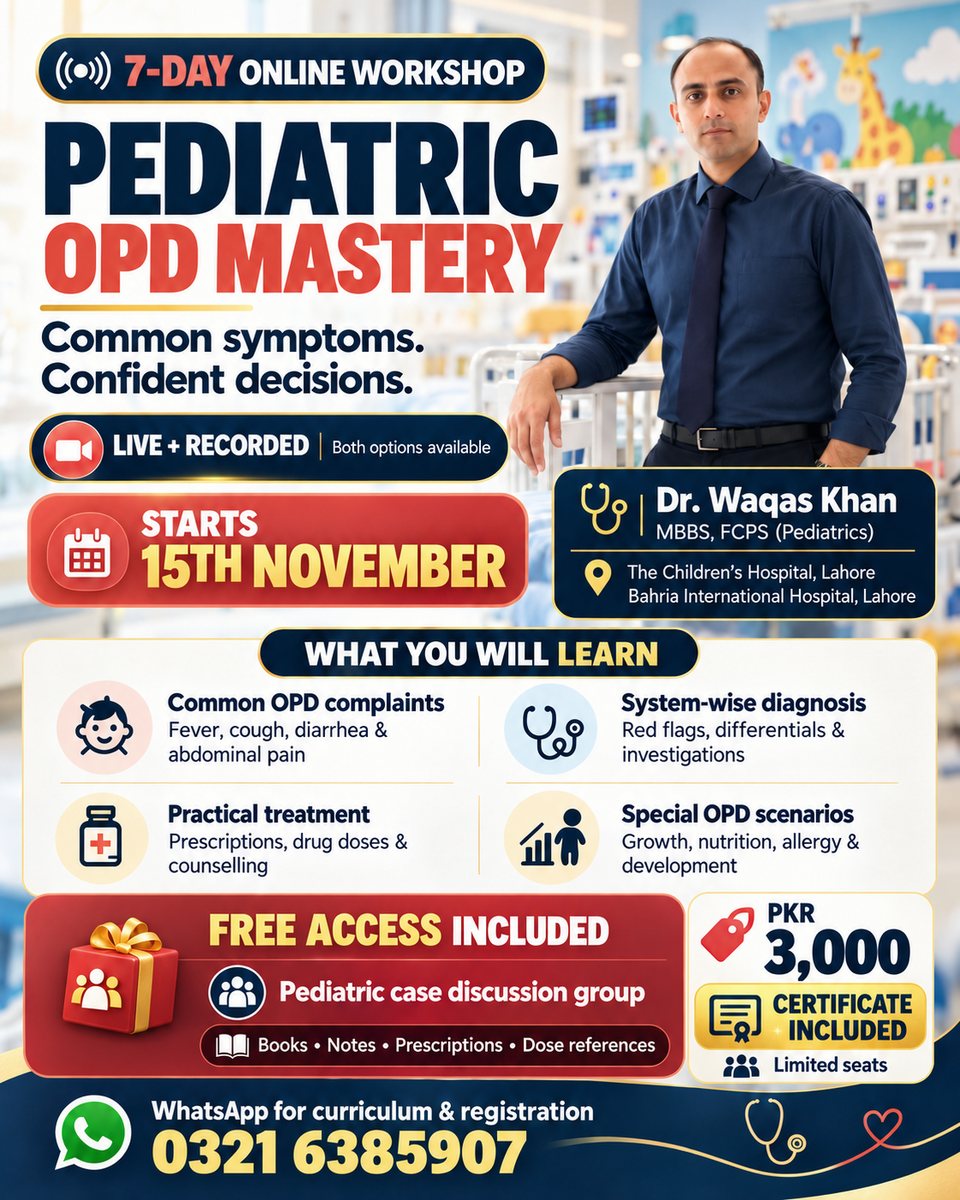
Try before you register

Sample lecture & notes

Sample lecture
Sample notes

Day 2 notes: Respiratory & ENT (preview). A preview of the notes you'll receive with this course.

Download sample notes (PDF)
FAQs

Common questions

Who can join?

Doctors, nurses and allied health professionals: medical students, house officers, medical officers, postgraduate trainees, GPs, consultants, paediatric nurses and allied health staff who want a practical update on paediatric OPD medicine.

When is the next batch?

The next batch is online and starts on 15 November 2026. The fee is a fixed PKR 3,000; there is no early-bird offer. New batches run about every month.

When are the live classes, and on which platform?

Live classes are on Zoom, 8–10 PM Pakistan time, usually on alternate days (not consecutive). Batches are kept small so everyone gets individual attention, and every session is recorded.

How do I pay?

Register on this website, then pay the fee by JazzCash, Easypaisa or UBL bank transfer and upload your receipt, all in a few minutes. Your seat is confirmed within a few hours of payment (if you pay late at night, the next morning).

Will I get a certificate?

Yes, a certificate of completion, issued within 7 days of the final class. This is clinical skills training, not a PMDC/HEC-recognised degree or postgraduate qualification.

Sample certificate of completion from Ashfaq Academy of Clinical Medicine, marked SAMPLE SAMPLE
Sample certificate of completion (tap to enlarge). Yours carries your name, the course dates, a certificate number, Dr Waqas Khan's signature and the institute seal. PDF
What if I miss a live session?

No problem. Every enrolled student gets 6 months of access to the session recordings, so a missed class is never a missed topic.

Is there a case-discussion group?

Yes. All members can join our free WhatsApp case-discussion group.

Do returning students get a discount?

Yes. If you have attended any of our courses or workshops before, you get a discount on your next one. Please ask us on WhatsApp for the current discount.

How do I get the Zoom link and recordings?

Each batch has its own private WhatsApp group. Zoom join links, recordings and case discussions are shared there. You are added once your payment is confirmed.

I live outside Pakistan. Can I join?

Yes, overseas students are welcome. 8 PM Pakistan time is 7 PM in the UAE, 6 PM in Saudi Arabia and 3 PM in the UK in winter (GMT), or 4 PM during British Summer Time. Register with your own country code and pay by JazzCash, Easypaisa or UBL bank transfer.

How do I register and pay?
  1. Fill in the registration form and choose your course. You will get a reference number such as AACM-261019-AB12.
  2. Send the course fee to one of our accounts: JazzCash: 03216385907 (Waqas Khan); Easypaisa: 03216385907 (Waqas Khan); UBL (United Bank Limited): account title Waqas Khan, account no. 0381318599799, IBAN PK33UNIL0109000318599799. Please write your reference number in the transfer note.
  3. Upload your payment receipt (image or PDF, up to 8 MB) with the transaction ID.
  4. We verify your payment and confirm your seat on WhatsApp. You can download a PDF of your registration straight away.

Courses marked 'Coming soon' only need a short 'register interest' form; there is no payment until dates are announced.

Course poster

Share this course

Tap the poster to view it full size, download it, or send it to a colleague on WhatsApp.

Pediatric OPD Mastery poster: 7-day online workshop, live and recorded, starting 15 November, PKR 3,000, with Dr Waqas Khan, MBBS, FCPS (Paediatrics)
Student reviews

What our students say

Thank you so much for all these classes, sir. They really boosted my confidence and strengthened my grip. I wasn't able to attend any of them live, but I am catching up on the recorded videos.

Maryam FehminaOPD Masterclass · June batch

Today is my first day as a house officer in paeds! Thank you for guiding me through all the basics and for creating this group. I have truly learned a lot here and will continue to do so.

Maryam IrshadOPD Masterclass · Batch 2

Thank you, sir, for sharing the recordings. The sessions are extremely useful, and I truly appreciate your efforts.

Dr NaeemOPD Masterclass · Batch 5
“An interesting and logical lecture.”— Dr Awais Talib“A very informative and supportive group.”— Dr Shafqat Ullah

See all student reviews & original messages →

Download poster